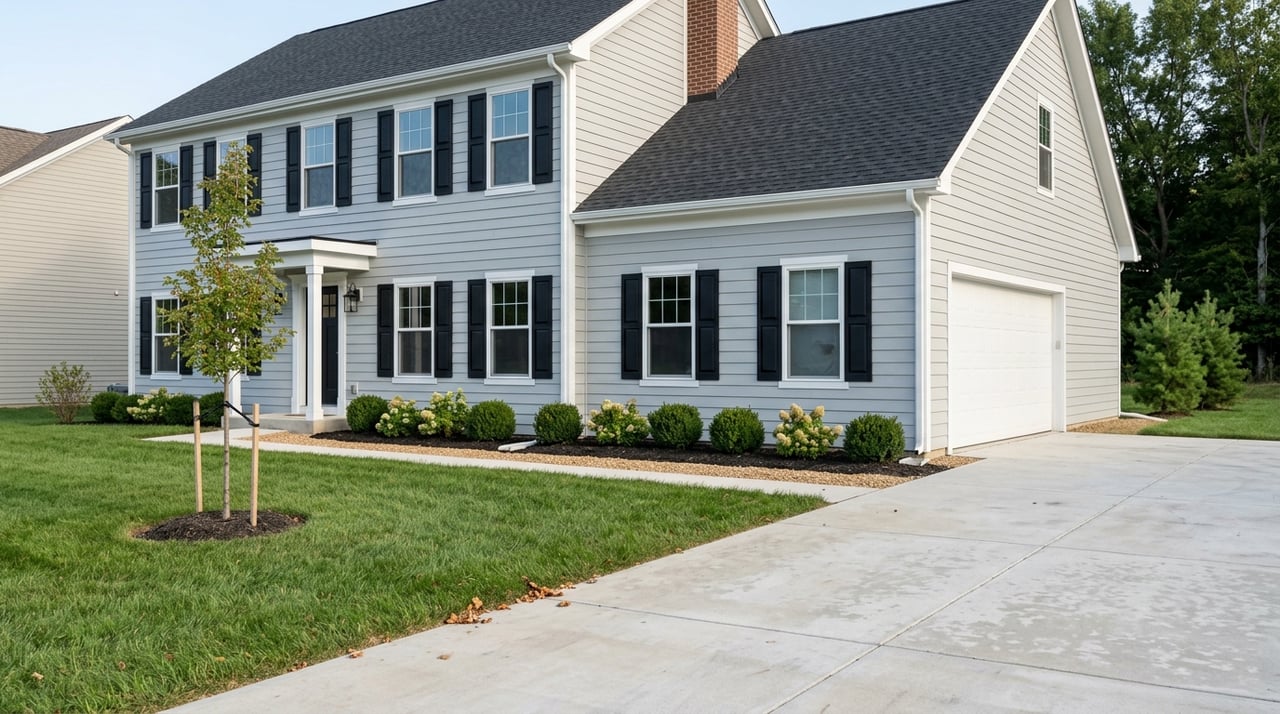
Leola PA New Construction Homes and Land Opportunities
April 16, 2026
April 16, 2026
Thinking about building instead of buying resale? In Leola, that idea can be more realistic than many buyers expect, but it also comes with more moving parts. If you want a newer home, more control over layout, or even a piece of land with room to grow, it helps to understand what is actually available and what makes a parcel buildable. This guide will walk you through what to know about new construction and land opportunities in Leola so you can move forward with confidence. Let’s dive in.
Leola sits within the Leola-Bareville urban growth area, which still has 290 buildable acres remaining, according to Lancaster County Planning. The same planning source notes one large vacant tract over 40 acres, recent new-residential density of about 6.5 dwelling units per acre, and surplus public water capacity through 2040.
That matters if you are searching for a newer home or a lot to build on. It means Leola is not limited to fully built-out neighborhoods. Depending on the parcel, zoning, and utility access, you may find a mix of subdivision-style homesites, established neighborhood lots, and larger land opportunities in the surrounding area.
If you are exploring new construction near Leola, it helps to know that lot sizes and housing formats can vary quite a bit. In the broader Lancaster-area market, some communities offer more compact homesites, while others lean toward larger lots and more spread-out settings.
For example, Keystone Custom Homes’ Strasburg Village offers homesites averaging about 1/3 acre, with a few around 1/2 acre. Nearby, Landmark Homes’ Hawk Valley Estates offers 1/2+ acre homesites, while Wyndale in Ephrata shows a larger single-family community format with a range of 1- and 2-story plans.
That range reflects a broader local pattern. Some buyers want a lower-maintenance lot in a neighborhood setting, while others want more outdoor space and a more rural feel. In and around Leola, both options may exist, but the right fit depends on your budget, timeline, and how much site work a property will need.
Zoning is one of the biggest factors in whether a lot works for your plans. In Upper Leacock Township, the zoning ordinance includes cluster-development standards that list single-family detached lots at 9,000 square feet in the R-1 table and 6,000 square feet in the R-2 table, with minimum lot widths of 80 feet and 60 feet respectively, according to the official zoning ordinance.
The ordinance also states that compact residential lots should be narrow and long, and that new principal buildings need frontage on a public street or approved private street. That is an important reminder for buyers looking at vacant land. A parcel may look promising on paper, but frontage, lot dimensions, and zoning rules can change what is actually possible.
A beautiful lot is only part of the equation. Utility access often plays a major role in whether a property is practical and cost-effective to build on.
Upper Leacock Township’s municipal authority operates public water and sewer for the township and portions of West Earl Township. Lancaster County Planning also points to surplus public water capacity through 2040 in the Leola-Bareville growth area. Those are positive signs for future development, but utility availability still needs to be confirmed on a property-by-property basis.
If a lot does not connect to public systems, other feasibility questions may come into play. Site conditions, septic needs, and testing requirements can affect both timeline and budget before construction even begins.
Most buyers exploring new construction near Leola will see practical, modern floor plans rather than only one-off custom homes. In nearby communities, the common thread is flexibility.
Wyndale lists 16 floor plans with 2 to 4 bedrooms and 1,839+ square feet, while Hawk Valley Estates lists 11 floor plans with 3 to 5 bedrooms and 2,180+ square feet. These communities highlight features many buyers want today, including open layouts, flexible living areas, and some first-floor owner’s suite options.
The Lancaster-area market also includes more compact attached and detached product types. Keystone’s Devon Creek includes cottages, estates, terraces, townhomes, and villas, with detached plans ranging roughly from 1,678 to 2,701 square feet.
For you as a buyer, that means the Leola-area market can support different lifestyles and price points. You may be comparing a neighborhood single-family home, a build-on-your-lot option, or a more compact attached home depending on your goals.
One of the biggest decisions is whether you want a home in a planned community or a house built on land you buy separately. Each path can work well, but they come with different tradeoffs.
A community build can offer a more predictable process. Lot selection, infrastructure, and builder workflow are often more streamlined, which can make planning easier.
You may also have a clearer sense of nearby lot sizes, available floor plans, and neighborhood layout from the start. For buyers who want a newer home without managing as many land-related unknowns, this can feel simpler.
Building on your own land can give you more flexibility in setting and homesite size. If you want extra outdoor space or a location outside a typical subdivision format, this route may be worth exploring.
It can also create opportunities in areas where finished new-home communities are limited. That said, the process usually requires more upfront due diligence on access, utilities, engineering, and permitting.
If you are planning to build, timing is important. According to Landmark Homes’ build-on-your-land process, buyers can expect 6 to 8 months of active construction and about 10 to 12 months total from start to move-in, after engineering review and site planning.
Keystone’s on-your-lot FAQ describes its process as three stages of roughly 120 days each, while also noting that timing depends on location, permitting, weather, and other factors. In other words, your move-in date is influenced by much more than the house plan alone.
If you are relocating or trying to coordinate a sale and purchase, this timeline is especially important. A build can be rewarding, but it usually requires more patience than buying an existing home.
When you buy land and build, the total cost is not just the base price of the home. Site work can significantly affect the final number.
Keystone notes that on-your-lot pricing can include land cost, site work, and home cost, with site work potentially covering stormwater management, engineering, permitting, water and sewer, erosion control, and driveway work. The same source notes that percolation testing is not included in that pricing. Landmark also states that a construction loan is required for building on your land, and Keystone says it uses a construction-to-permanent loan structure that combines land and home into one settlement and one loan package.
This is why two lots with similar asking prices can lead to very different overall budgets. The land may be the starting point, but site prep often shapes the real cost.
Before you write an offer on land in or near Leola, make sure you understand the basics of buildability. A vacant parcel is not automatically ready for construction.
Here are a few practical questions to ask:
Upper Leacock Township notes that zoning and building permits are required for new buildings, and frontage requirements apply to new principal uses and buildings according to its zoning and building permit information.
If you want to make a smart decision, compare more than the home itself. Look at the full picture.
A larger lot may sound appealing, but it could come with added engineering, driveway, or utility costs. A smaller homesite in a community may offer a more straightforward path with fewer unknowns. The best option depends on whether you prioritize space, convenience, customization, or speed.
Working through these details early can save you time and help you avoid surprises. It can also help you compare apples to apples when one property is a finished community lot and another is raw land.
If you are considering new construction or land in Leola, the right guidance can make the process much easier. The David A Wissler Team of Coldwell Banker Realty can help you evaluate land opportunities, compare new construction options, and connect with trusted local resources so you can move forward with clarity.
The Wissler Team is dedicated to providing you with exceptional service and unparalleled expertise. Discover the Difference Local Expertise Makes.